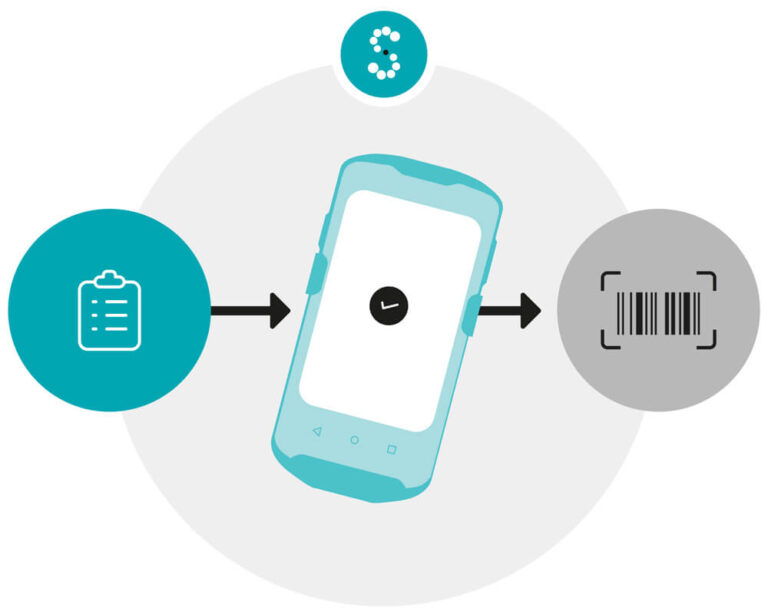






When we think of summer, we often think of holidays, sunshine and terraces… rarely warehouses. It is true that everyone needs to switch off and recharge, but logistics never takes a holiday. Orders continue to come in, and teams still need to pick, check and ship them. All of this happens with fewer staff, higher temperatures and stock visibility that is not always perfect. As a result, certain recurring problems can arise. Nothing insurmountable, fortunately, but when they are not anticipated properly, they can quickly slow down operations and lead to errors. Here are the 3 most common logistics problems in summer, and how to avoid them.
In summary
|
||
1️⃣ Reduced teams, but operations still continue
The first summer classic: reduced staffing levels. Holidays, cover arrangements, temporary workers to train, unexpected absences… warehouse organisation can quickly become more challenging.
Depending on the sector, summer can even bring peaks in activity, particularly for seasonal products, e-commerce, DIY, gardening, clothing, food or healthcare. Demand shifts with the season, and certain product categories can see their volumes increase significantly.
🔗 Discover our article to learn how to manage peaks in activity effectively.
Why is this a real logistics issue? 📦
When a team is operating with fewer people, every inaccuracy has a greater impact. An incorrectly recorded location or a poorly prioritised order can be enough to slow down the entire chain. And when new team members need to learn processes quickly, even the slightest complexity can become an obstacle.
Order picking is, in fact, one of the most sensitive operations in warehouses, as it requires time, method and manpower.
🔗 Also read: Order Picking: The Weak Point of Warehouses?
How can a WMS help? ✅
A WMS (Warehouse Management System) helps structure operations, even when teams are reduced.
How? By guiding operators step by step: where to go, which item(s) to pick, what quantity to take and in which order to process orders. This helps reduce dependence on individual experience and makes processes easier to follow.
For SMEs, this is particularly useful during the summer period: less experienced team members can become operational more quickly. They do not need to know the entire warehouse by heart; a WMS like Satelix supports them directly on the warehouse floor.
2️⃣ Greater risk of picking errors
Summer can also increase the risk of picking errors. This is not necessarily because teams are working less effectively. Often, it is because the context is more demanding: cover staff, fluctuating pace, fatigue caused by heat, changing priorities, seasonal references, irregular volumes… In these situations, common errors can quickly reappear: the wrong item, the wrong quantity, the wrong reference, an incomplete order, and so on.
How does a WMS reduce errors? ✅
A WMS helps make order picking more reliable through several key features:
- Scanning items and locations;
- Checking picked quantities;
- Validating steps in real time;
- Tracking stock movements;
- Prioritising orders;
- Reducing manual data entry.
The idea is not to replace teams, but rather to prevent them from having to check everything constantly. A WMS like Satelix acts as a safety net: it helps detect discrepancies earlier, before an error reaches the customer.
3️⃣ Lack of stock visibility
The third common problem during the summer is a lack of visibility. This issue is often barely noticeable at first: a quantity may look correct in the ERP, but the reality on the warehouse floor tells a different story. A few common examples:
- A pallet has been moved without being updated;
- A seasonal product is selling faster than expected;
- An order is accepted even though the available stock is not reliable.
Little by little, the gap widens between the system stock and the actual stock. And when teams are smaller, these discrepancies may be detected later. That is when problems begin: stockouts, overstocking, blocked orders, incomplete picking, and more.
🔗 To go further: Stock Discrepancies: Why Do They Happen and What Can You Do?
How does a WMS improve stock visibility? ✅
A WMS like Satelix allows stock movements to be tracked continuously: from goods receipt to dispatch, including putaway, transfers, order picking and stocktaking. Every action on the warehouse floor feeds into the system. As a result, the data is more reliable and, above all, easier to use.
Connected to the ERP, the WMS also plays a key role in sharing information across every part of the supply chain, including purchasing, sales and sales administration. With Satelix WMS, this connection between the warehouse floor and the ERP is built in, helping SMEs manage their stock more effectively without relying on multiple files, phone calls or manual checks.
How can you anticipate logistics problems in summer?
The good news is that these problems are not inevitable. Summer can be prepared for like any other critical period of the year. The key is to identify points of friction before they become blockers.
Before the summer period, it can therefore be useful to:
- Check stock levels for seasonal products;
- Identify the most sensitive references;
- Simplify picking routes;
- Update locations;
- Formalise order priorities;
- Train additional staff on short, clear processes;
- Reduce manual data entry as much as possible;
- Connect information between the warehouse and the ERP.
👉 Sometimes, small adjustments can make the biggest difference.
A WMS: a powerful ally for a more peaceful summer
To conclude, a WMS like Satelix helps address these three key issues. It guides teams, improves picking reliability, updates stock in real time and connects warehouse floor operations with management tools.
For SMEs, it is a practical way to stay in control without making the organisation more complex. With the right tools, logistics becomes much easier to manage! ☀️
Do you have a logistics project?
Let’s discuss it together!
Did you enjoy this article? Follow us on LinkedIn to keep up to date with all our latest news! 😌