





Stock discrepancies are a common issue in logistics. In most cases, they are caused by a lack of traceability or poorly structured processes. But identifying them is another challenge altogether… In this article, we explain why they happen and, more importantly, how to fix them.
“We have stock discrepancies, but we don’t understand why”
In reality, this is a very common situation in warehouses. Theoretical stock no longer matches actual stock, some items cannot be found, others appear in excess… and one question keeps coming up: where does the problem come from?
The answer is simple: stock discrepancies are never random. They are almost always linked to a lack of traceability or insufficiently structured processes.
The most common causes of stock discrepancies
Human errors
Incorrect entries, reference mix-ups, missed validations… Without a strict framework, these errors quickly add up.
Untracked movements
Items moved without being recorded, forgotten returns, informal transfers… These are among the main causes of discrepancies.
Errors at receiving stage
A rushed or incomplete check can distort stock from the very beginning. And inaccurate stock at entry remains inaccurate throughout.
Losses and anomalies
Damage, theft, misplaced items… These events directly impact data reliability.
Inadequate tools
Excel sheets, manual tracking, on-the-ground habits… Without a structured system, stock accuracy relies too heavily on people.
The impact on your operations
Stock discrepancies have wider consequences than you might think:
- Unexpected stockouts
- Costly overstocking
- Delayed or unfulfilled orders
- Operational time loss
- Decreased customer satisfaction
In short, you lose control of your logistics.
Regaining control: the basics to put in place
Before even talking about tools, certain practices are essential.
Structuring processes
- Systematic scanning
- Movement validation
- Clear procedures
Regular checks
Cycle counts help detect discrepancies quickly.
🔗 Resources: discover different inventory methods by clicking here.
Tracking the right indicators
- Stock accuracy
- Discrepancy frequency
- Value of discrepancies
Without measurement, improvement is impossible.
Why these best practices are not always enough…
On paper, everything makes sense. But in reality, things are different. Scans are sometimes forgotten, processes bypassed, and checks irregular.
That’s because they rely entirely on people.
How Satelix WMS concretely reduces stock discrepancies
This is exactly where a tool like Satelix WMS makes a difference: it turns best practices into operational reflexes.
100% traceable flows
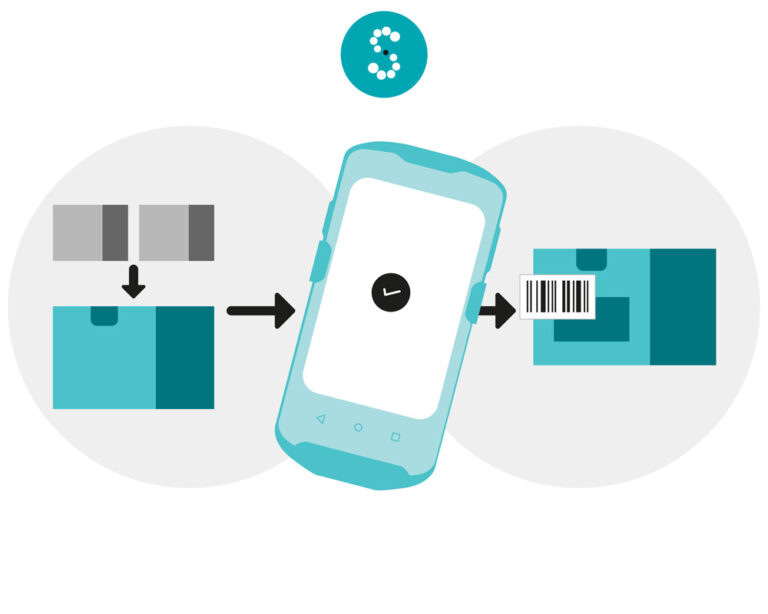
Every movement is recorded: Receiving > Storage > Picking > Shipping.
No operation can be missed.
Reliable receiving process
The WMS systematically checks quantities, references, and immediately flags anomalies. Stock is accurate from the start.
Inventory integrated into daily operations
- Cycle counts
- Quick checks
- Automatic anomaly reporting.
No need to wait to make corrections.
Full traceability
Every action is logged in the WMS. In case of discrepancies, you know exactly where they come from.
Guided workflows
The WMS enforces best practices:
- Mandatory steps
- Clear instructions
- Real-time validation.
In short: fewer errors, greater reliability.
Real impact on the ground
With Satelix WMS, companies observe:
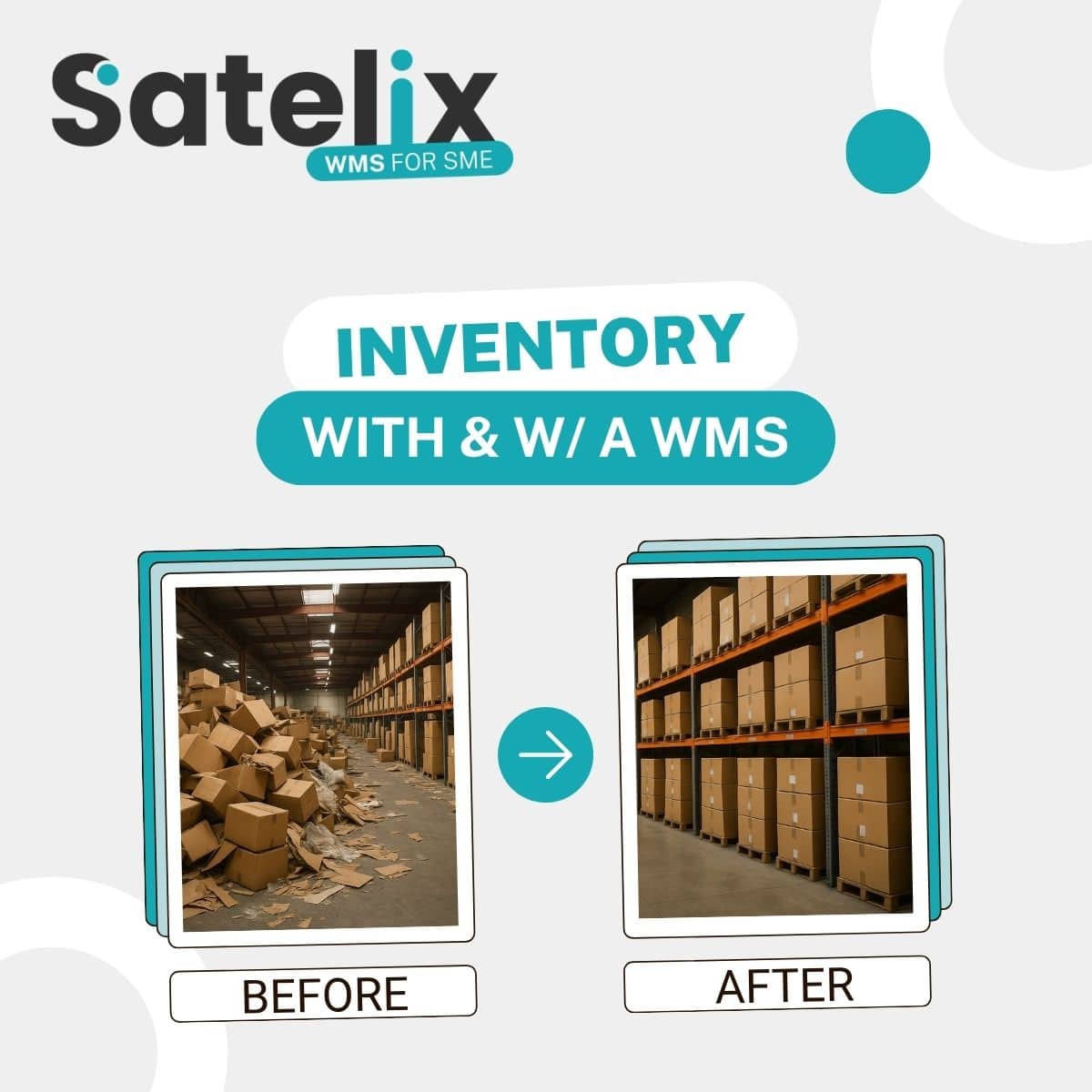
- A significant reduction in stock discrepancies
- Time savings on inventories
- Better organisation
- Real-time visibility
Stock finally becomes reliable and usable.
“Operations such as inventory and order processing have become faster and more accurate, perfectly meeting the food industry’s requirements in terms of safety and responsiveness.” – T&T Foods
Conclusion
Stock discrepancies are not inevitable. They are the symptom of a lack of structure and visibility. By combining best practices with the right tools, you can improve data accuracy, secure your operations, and enhance overall performance.
And most importantly, you will finally understand what is happening in your warehouse.
Discover other features!
Did you enjoy this article? Follow us on LinkedIn so you don’t miss any of our updates! 😌