





A logistics activity peak can quickly put pressure on the entire supply chain. Sudden increases in order volumes, promotional campaigns, seasonal demand or holiday periods all require logistics teams to handle higher workloads while maintaining service levels.
In these situations, hiring temporary staff is often the first solution that comes to mind. However, there are other ways to manage a logistics activity peak without recruiting additional employees. So, how can you handle higher volumes without increasing headcount? Let’s take a closer look.
Why Do Activity Peaks Put Warehouses Under Pressure?
When order volumes suddenly increase, it is not only order picking that is affected. The entire logistics chain comes under pressure, including goods receiving, stock storage, order preparation, shipping, returns management and inventory tracking.
Without clear visibility over operations, bottlenecks quickly emerge and teams spend more time dealing with urgent issues than working efficiently. 🤐
Signs That a Logistics Activity Peak Is Approaching
Not every activity peak arrives unexpectedly. Certain indicators can help businesses anticipate increased demand and prepare accordingly:
- A gradual increase in order volumes;
- A specific commercial period (sales events, Black Friday, promotions);
- Known seasonal trends;
- A product launch;
- Increased customer enquiries or pre-orders.
Identifying these signals early allows businesses to take the right actions before pressure starts to build. 🔍
The Limitations of Temporary Recruitment
Hiring additional staff to absorb an activity peak may seem like the obvious solution. However, several challenges often arise in practice:
- Logistics labour shortages;
- Significant training time;
- Reduced productivity among new starters;
- Increased risk of errors;
- Higher operational costs.
At a time when recruitment challenges remain significant, many companies are looking for ways to achieve more with the resources they already have. 🙂↕️
5 Ways to Manage Activity Peaks Without Hiring
1️⃣ Optimise Existing Processes
Before considering additional headcount, it is often worth analysing existing processes. Some activities can generate considerable inefficiencies, including unnecessary travel, duplicate data entry, product searches and repetitive manual checks.
In many cases, a few organisational adjustments can significantly increase processing capacity without requiring additional resources.
2️⃣ Prioritise Orders Intelligently
Not all orders have the same level of urgency. Implementing clear prioritisation rules allows teams to focus first on:
- Express orders ;
- Strategic customer orders;
- High-value shipments.
This approach helps prevent bottlenecks and improves delivery performance during busy periods.
3️⃣ Reduce Administrative Tasks Through Automation
Many warehouse teams still spend valuable time on tasks that could be automated, such as:
- Manual data entry;
- Stock updates;
- Document generation;
- Task allocation.
Automation frees up operational time and enables employees to focus on higher-value activities.
4️⃣ Use Historical Data
Activity peaks are not always unpredictable. Historical data often helps identify:
- High-risk periods;
- The most requested product categories;
- Average processing volumes.
With greater visibility, logistics managers can anticipate demand and adjust operations before workloads increase.
5️⃣ Use a WMS to Improve Productivity
This is probably one of the most effective solutions. 🚀
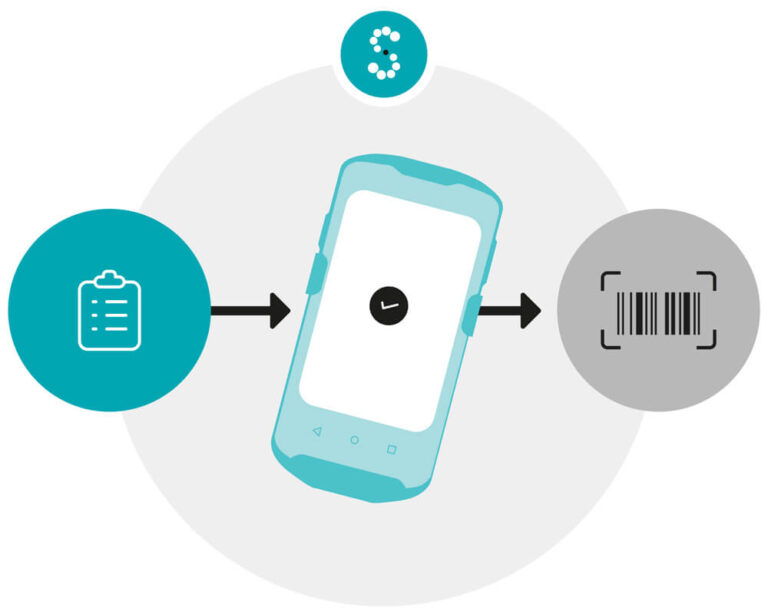
A WMS (Warehouse Management System) enables businesses to manage all warehouse operations from a single platform, including:
- Real-time inventory management;
- Optimised picking routes;
- Automatic task allocation;
- Performance monitoring;
- Full traceability of logistics flows.
The result? Teams work more efficiently, make fewer mistakes and gain better visibility over priorities.
How Does a WMS Help Handle More Volume With the Same Team?
Improved Operational Visibility
One of the biggest barriers to logistics performance is the lack of real-time information.
A WMS such as Satelix provides clear visibility of:
- Available stock levels;
- Orders in progress;
- Team workload;
- Potential bottlenecks.
This enables managers to make faster decisions and allocate resources more effectively. ☝️
Faster Order Preparation
The system guides warehouse operators throughout their tasks. Travel routes are optimised, product locations are instantly available and picking errors are significantly reduced.
For the same volume of activity, a team using a WMS can generally process more orders than a team relying on manual tools or spreadsheets.
Better Resource Allocation
A WMS can automatically organise tasks according to:
- Priorities;
- Volumes;
- Available resources.
This flexibility becomes particularly valuable during periods of high activity.
In Summary
To manage a logistics activity peak without hiring:
- ✅ Optimise your internal processes;
- ✅ Prioritise the most strategic orders;
- ✅ Automate low-value administrative tasks;
- ✅ Make use of historical data;
- ✅ Implement a WMS to improve productivity and operational visibility.
Turning Activity Peaks Into Opportunities
Activity peaks should no longer be viewed as a threat. With the right organisation, optimised processes and suitable tools, they can become a genuine growth opportunity.
The objective is not necessarily to work harder, but to work smarter.
For many SMEs, the key lies in improving existing productivity before increasing headcount. A WMS helps businesses become more efficient, responsive and agile while handling greater volumes without significantly increasing operational costs.
Satelix WMS: Your Ally for Managing Activity Peaks
During busy periods, visibility over stock and operations becomes essential. Satelix WMS helps businesses organise workflows, prioritise tasks and reduce picking errors.
For more than 20 years, Satelix has supported SMEs in optimising their logistics operations through real-time inventory management, order preparation management and full operational traceability.
🪢 Connected to ERP systems such as Sage 100, Sage X3, EBP Elite and Cegid XRP Flex (see the full list here), Satelix WMS helps teams improve efficiency without increasing organisational complexity, while making the most of existing resources.
Discover Satelix WMS
Did you enjoy this article? Follow us on LinkedIn to stay up to date with all our latest news and insights! 😌